A hot lead!

Dear reader, that is, if there are any to speak of. I’m painfully aware that I, as a devoted paladin of science, must needs eschew all forms of human relationships which are only a hindrance in the pursuit of pure knowledge. However, even my steely objectivity is vulnerable to the emotional needs that are part and parcel of the human experience; thus, I found myself not only in need of what I would not go so far as to categorize as “companionship” but rather something more along the lines of proximity to the unwashed; that and a stiff Bourbon is my prescription for this regrettable weakness.
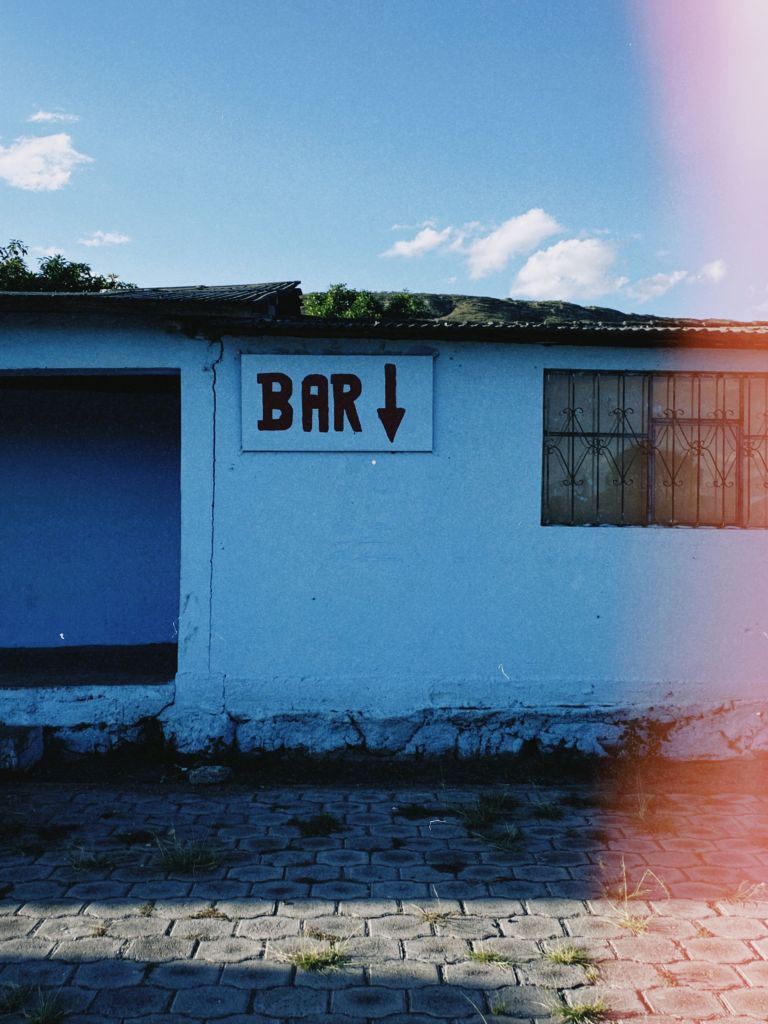
A haven to some, hell to others.

Having diagnosed the ailment, I made haste to rectify the situation through a trip back into town and to the nearest dive bar I could find. These types of establishments are best to frequent if one wishes to maintain a low profile, which was necessitated by my status as an illegal immigrant. Denizens of dilapidated public houses tend to keep to themselves. Having stopped in at a local bathhouse wherein I performed much-needed ablutions upon my person, I found my way to The Ohai bar, a sufficiently shabby structure at the edge of town. Two or three Wild Turkey Boiler Makers later, my spirit was well on the path to renewal. As 6:00pm rolled around, other folks in search of solace and solitude began to trickle in, and the barkeep popped on an old cathode ray television set to a local news channel.
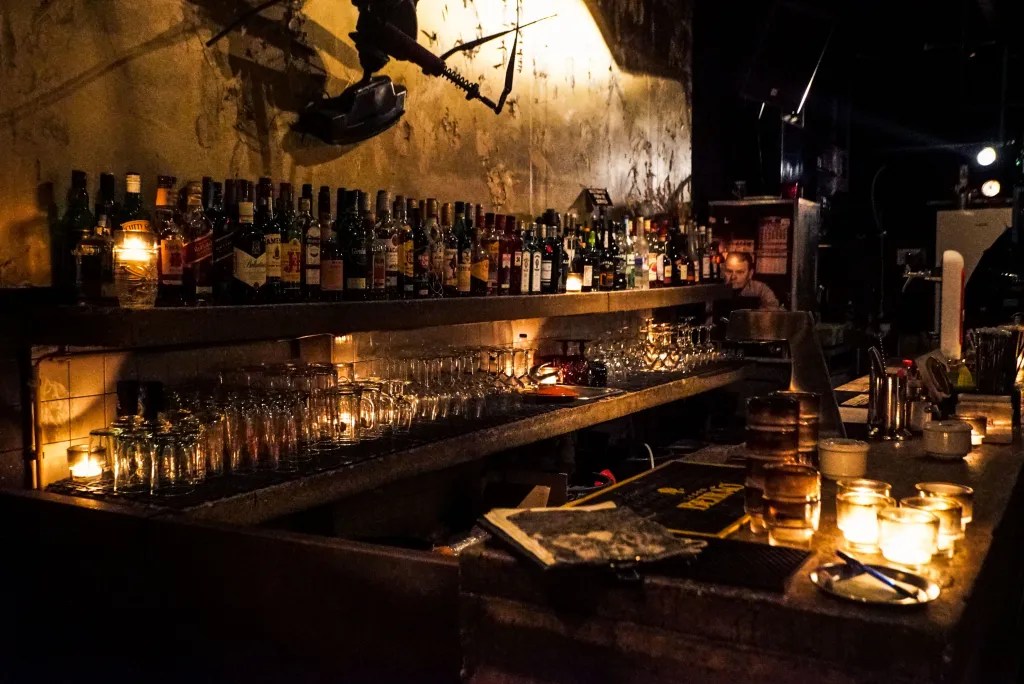
Much of the news threatened my alcohol inspired equanimity until an item of great interest presented itself in the form of a report of a Bigfoot encounter in New Mexico; a burger boy had witnessed a large hairy hominid while being attacked by something along the lines of a terrestrial Octopoda which had emerged from a dumpster located behind his place of employment.  An account of not one but possibly two undocumented species would be enough to pique the interest of any field biologist, but of course my narrow field of study rendered this tentacled anomaly of lesser interest than perhaps it should have.  The eyewitness ( I would hesitate to apply the word reliable in this instance) described an eyebeam attack emanating from the Sasquatch, which is an ability heretofore unheard throughout the decades I have spent studying the phenomenon; hence I must at the very least track down and interrogate this child to ascertain if his claims bear up under expert scrutiny.

So friends, I sally forth on the path of scientific rigor which, once chosen, cannot be abandoned!
Covert in Canada

Those faithful followers of my inestimable exploits will have noted my extraordinary attention to detail. It is a trait, which I have assiduously hammered from youthful raw ore to the high carbon academic steel it is today. While I have been gifted with more than perhaps my fair share of intellect, a largess of mind must be paired with steely discipline or the unfocused mind turns to the abstract musings of say, the theoretical physicist, whose time is largely spent behind a desk. These devotees of mathematical models would find the minutiae that the biologist wrestles within the course of a day far too exhausting. But I digress, my intention here is not to denigrate the valuable, albeit lesser scientific fields.

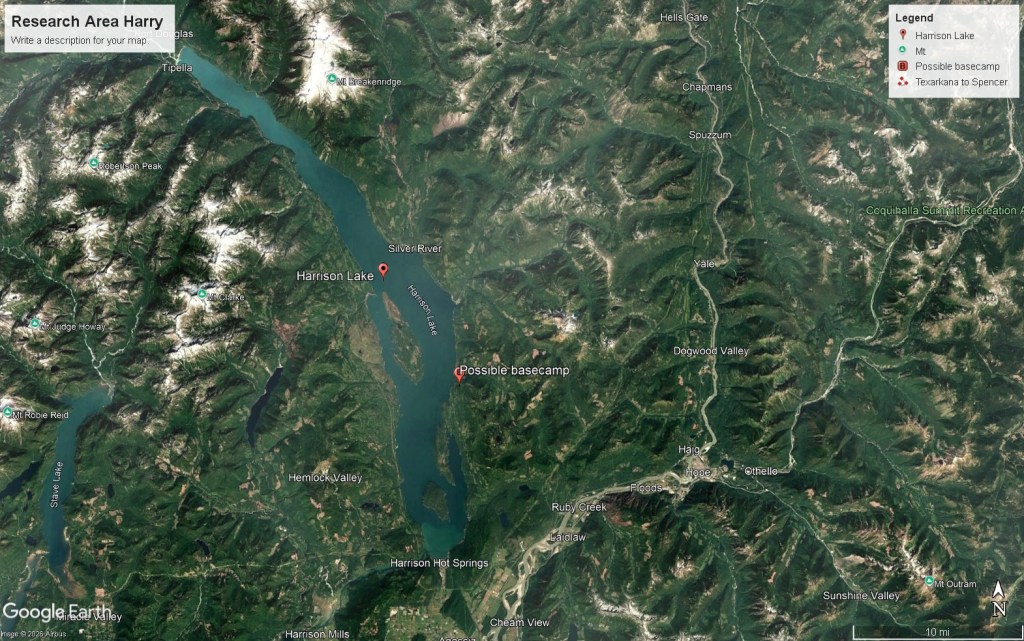
 This tangent shall now proceed in full circle to the matter at hand.  In preparation for the trek to Harrison Lake, I have decided to go full native and not rely solely on the performance of the Canuk accent I have been perfecting to blend in effortlessly with the indigenous population. To fully kit myself out, I have taken a calculated risk and visited a local clothier in search of Canadian camouflage. This was somewhat tricky as I had none of the local currency on my person, having bushwacked my way across the border and spent the previous months deep in the wilderness.

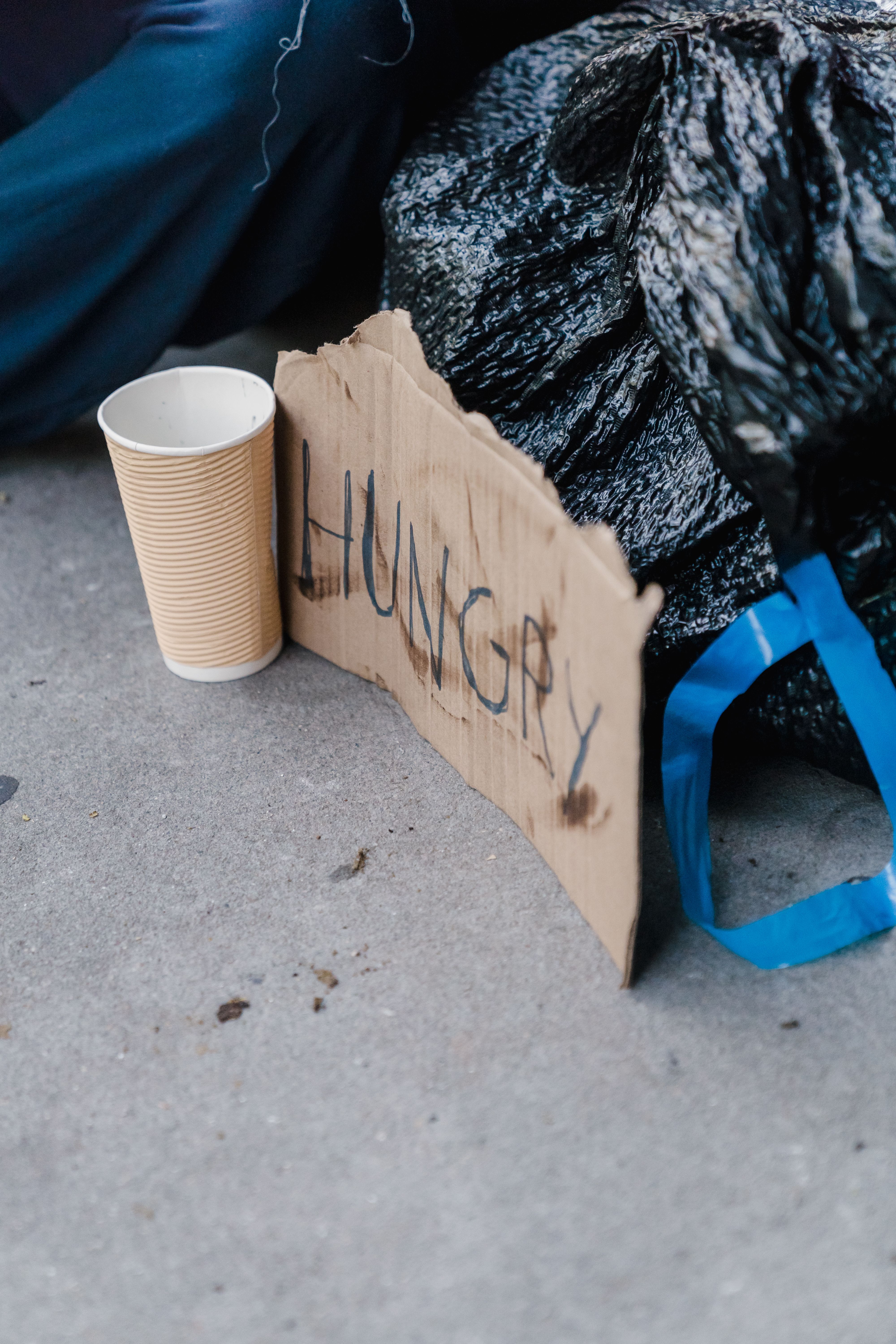
To remedy this, I took advantage of the wild and unkempt appearance one can’t help to develop over months spent in the bush, to engage in some mild panhandling (and not for the first time). After several hours I had accrued what I deemed was enough to meet my needs.  I made my way into the City of Chilliwack and found a store called Sport Chek which sold sporting attire and purchased a Vancouver Canuks jersey and a B.C Lions ball cap and then marched north towards Fraser River, away from the droves of late morning shoppers. Once I had made it back into forest, I began to distress my purchases to artificially provide them with the patina of long use to further convince those I might meet as to the legitimacy of my legal status in the country. As you can see, no stone will be left unturned in my pursuit of the North American Wood Ape.

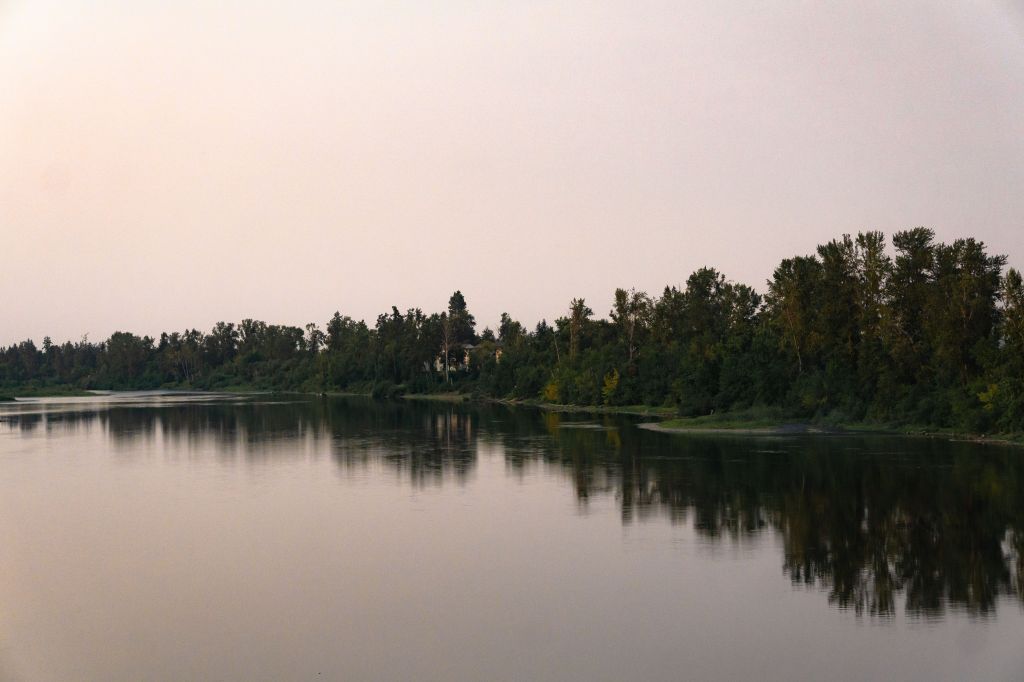
Fraser RIver
Chilliwack

All that remains now is long road to Harrison Lake. Further west down river there is a bridge which is the only reasonable means of crossing the Fraser, but it is located inside a populated area which is a situation I would rather avoid unless forced to by necessity. Therefore, I have decided to hike north and east along the river’s southern bank as far as it will allow. If my luck holds perhaps, I might find a watercraft suitable for a quick crossing which of course is a criminal act but an act that the Gods of science might forgive as necessary step towards professional greatness. Hopefully I’ll come across a narrow and shallower section of the river which I could attempt to cross so that I won’t have to resort to larceny.

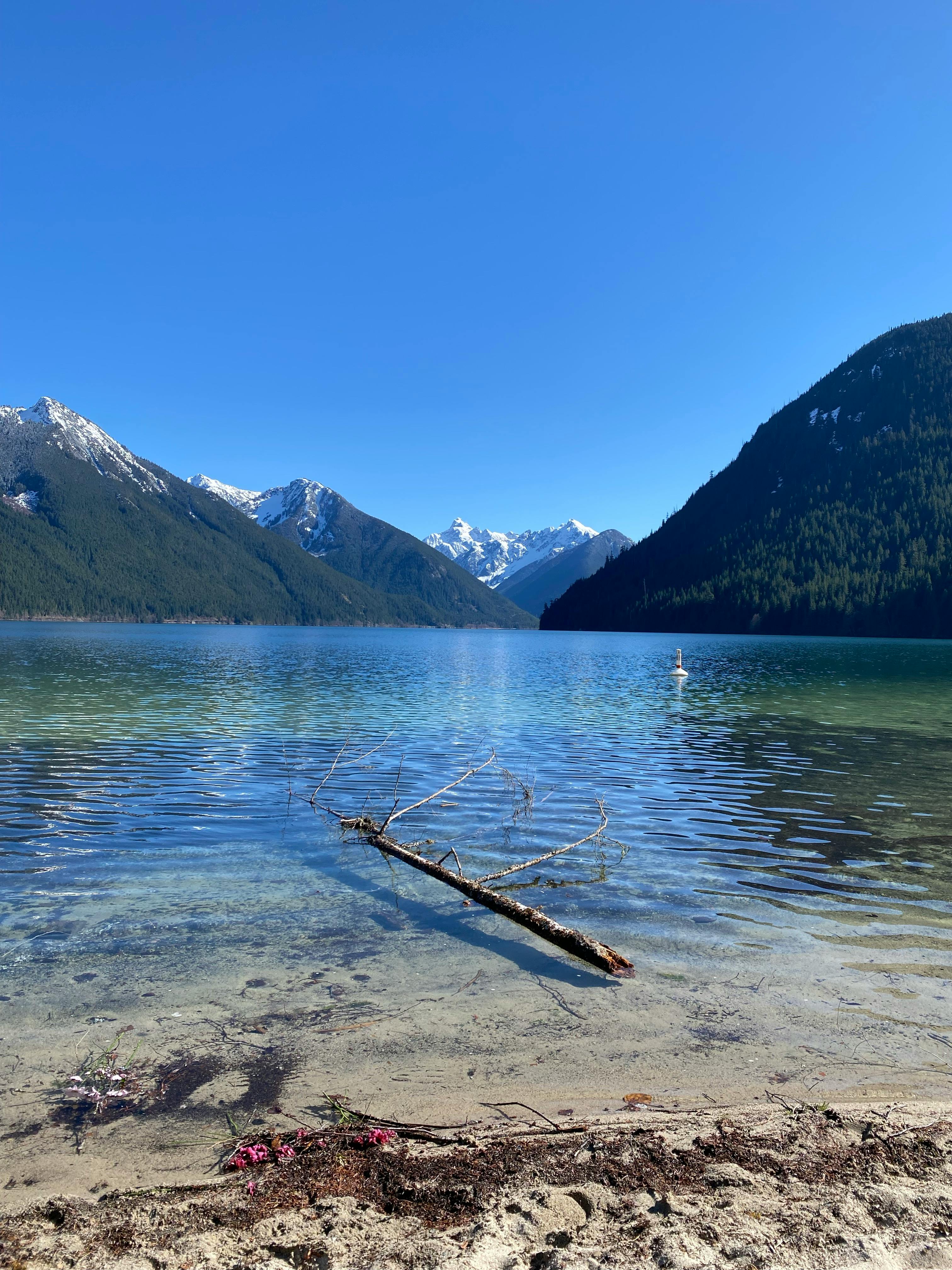
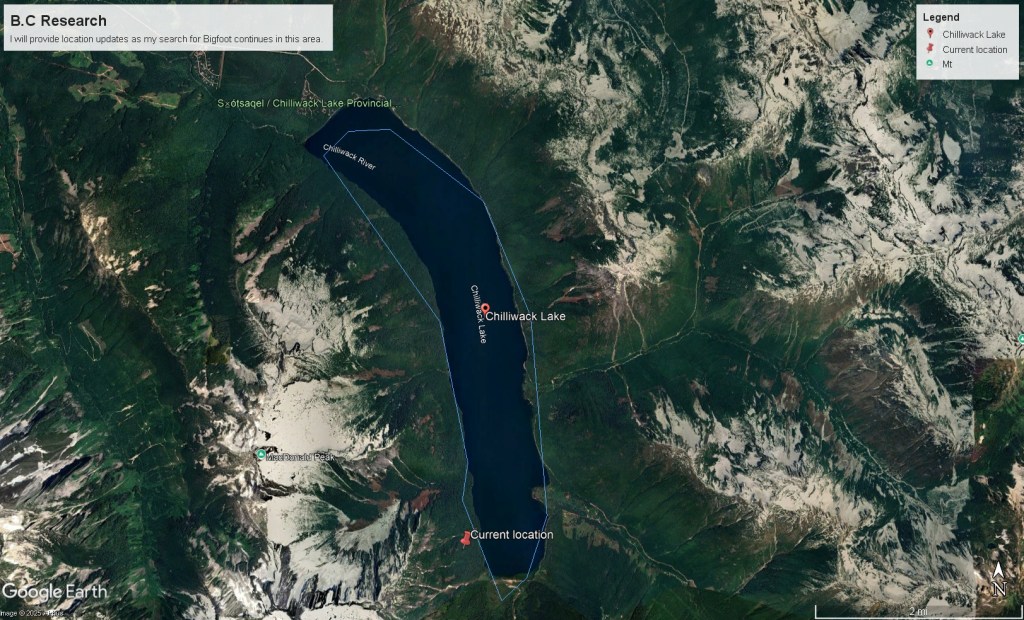
Lake Chilliwack

The heavily forested area around Lake Chilliwack contains ample signs, indicating the presence of the target species G.blacki, known to the layman as Sasquatch. Sasquatch lore in British Columbia dates back well into prehistory. This region is home to the Ts’elxwéyeqw, a tribe that belongs to the Sto:lo People the Salish Nation. The origin of the name Sasquatch is attributed to this tribe’s name for the Wildman, which is Sasq’ets.  The name Chilliwack is the English pronunciation of Ts’elxwéyeqw. So dear reader, we traverse hallowed grounds.

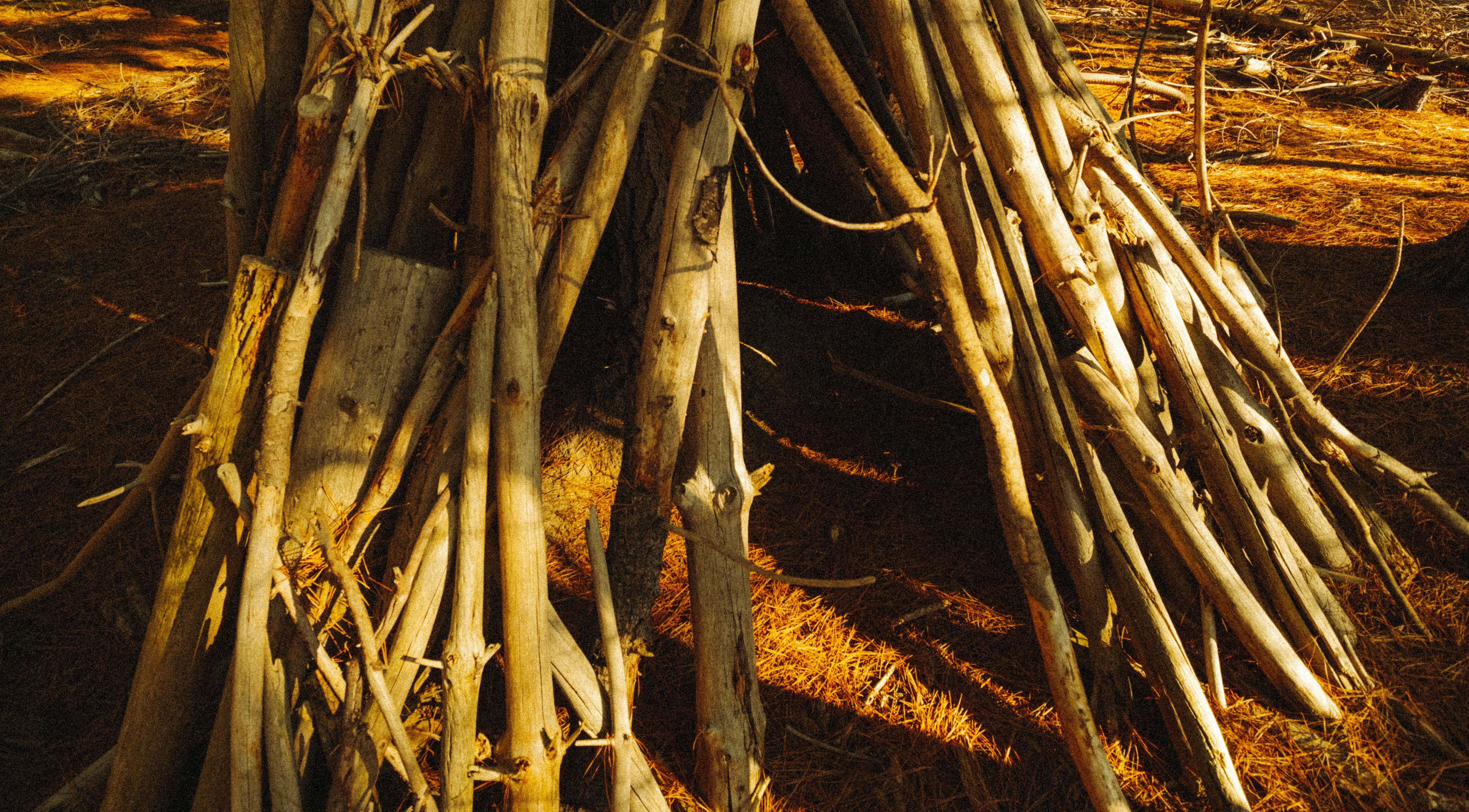
The sign I have discovered thus far for the elusive beast, the veritable White Whale of my own story, is as follows: Pyramidal tree structures, tree breaks or territorial markers, tracks (although most were not well defined enough to warrant attempting a cast), scat, the contents of which clearly contained items one would find in a dumpster. This may sound like little result considering the hard graft that is fieldwork. Still, each piece represents irrefutable physical evidence to be thrown upon the already mountainous pile collected by not just yours truly but also by other less dedicated amateurs who, in fact, do occasionally contribute through accident to this field of study.

Possible territorial marker?

Thus far, I have not recorded any auditory evidence that would suggest that the area is currently inhabited by my research subject. This fact makes for many lengthy and terribly dull nights spent deploying my shotgun mic in various directions in the event of a wood knock or vocalization. Needless to say, I believe it’s time to pack up and move elsewhere.

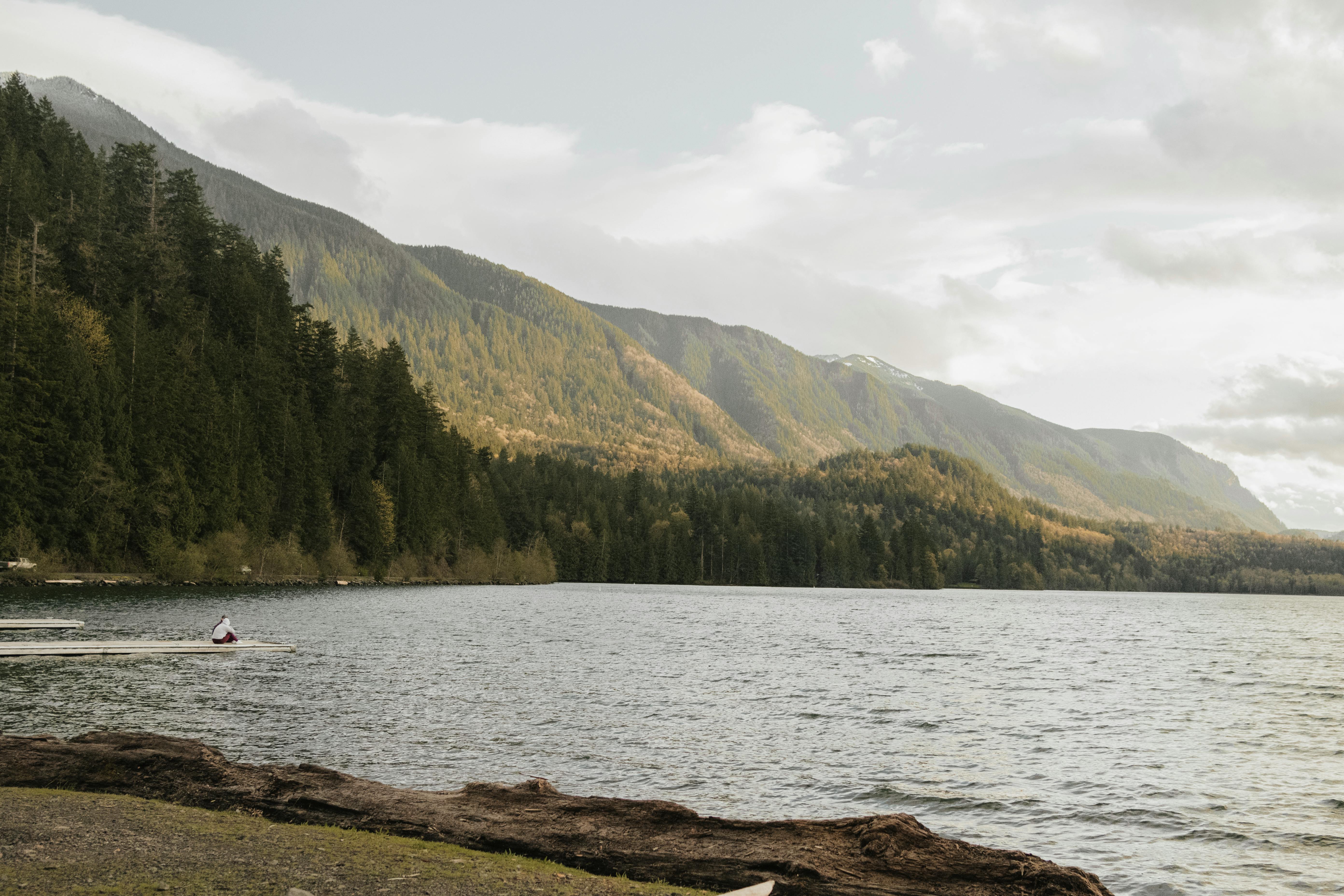
Having consulted my trusty map, I have decided to risk passing through a populated area as this provides the shortest path between here and Harrison Lake, a journey of approximately 147 KM (91 miles). Harrison Lake has a long history of activity and is considered by some to be the Bigfoot capital of British Columbia. I shall soon put this reputation to the test.

I am, however, reticent to risk exposing myself to the locals as my status as an illegal might bring an end to my foray into this virgin research territory. To increase my chances of success, I have been assiduously practicing my Canadian accent, which I feel is quite passable after only a few days. A shall mingle with the Canuks, and none shall be the wiser!

New worlds.

Dear reader,

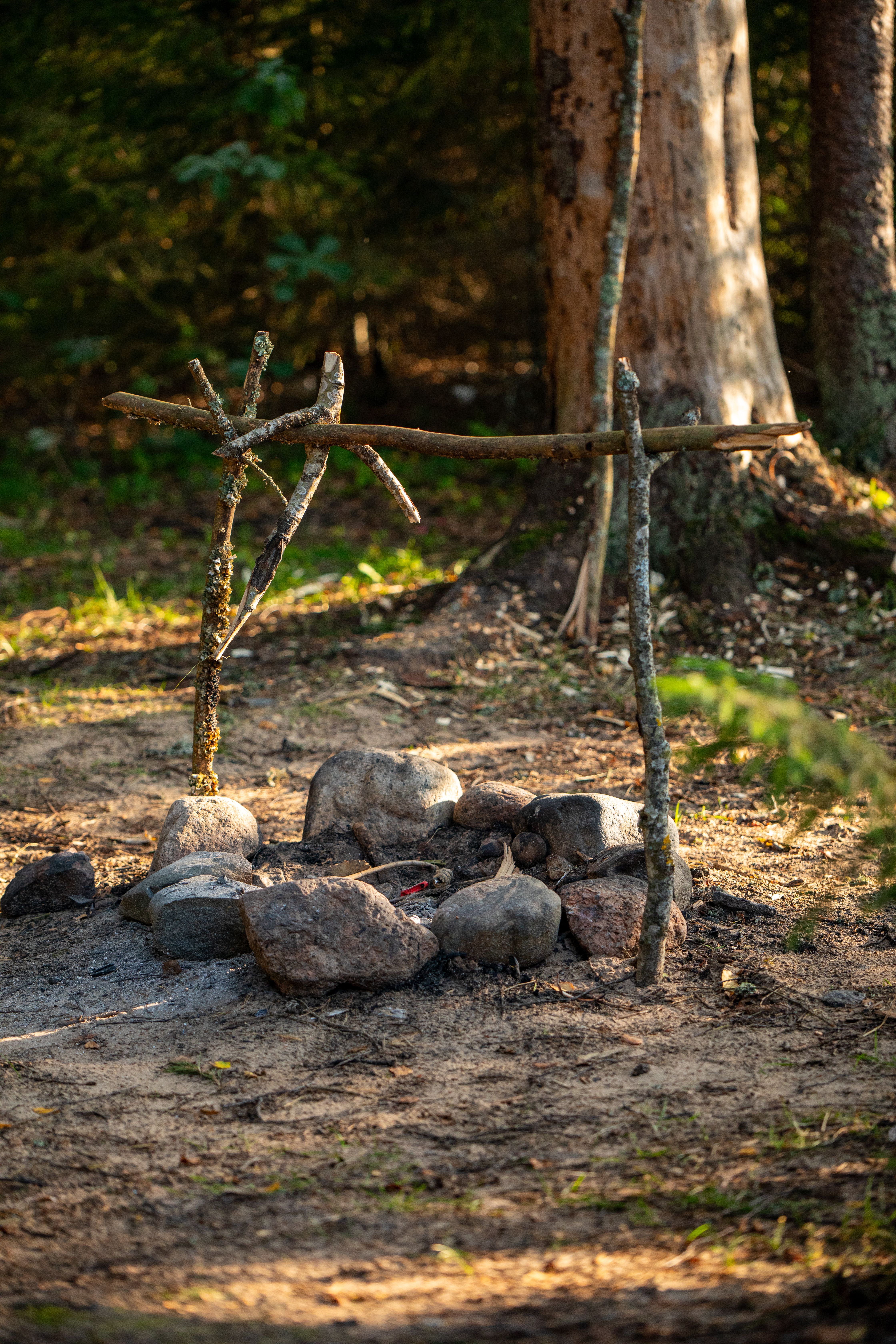
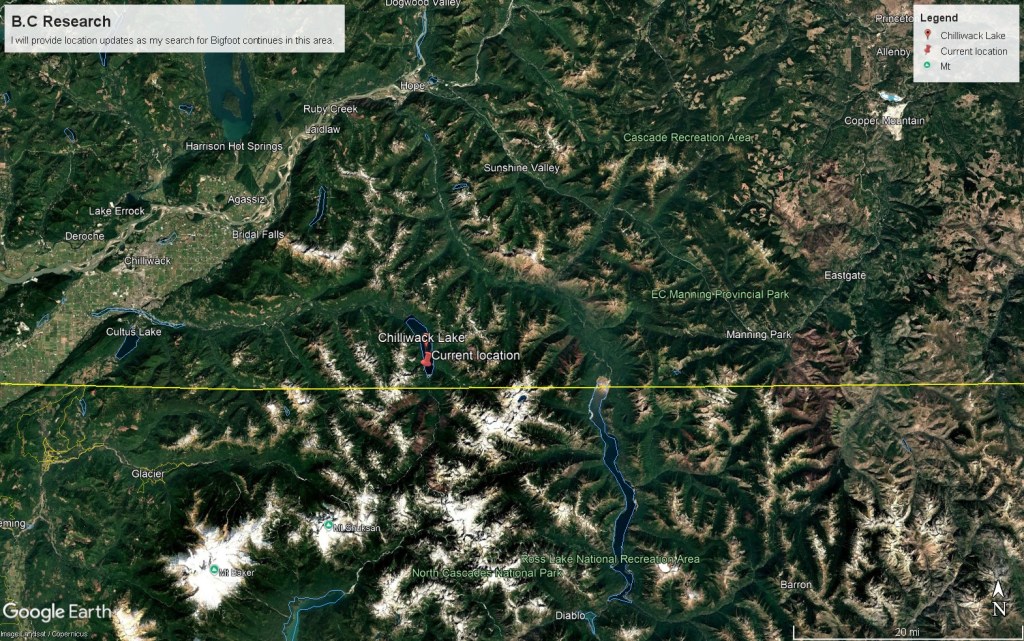
Having exhausted my research areas in North Cascades National Park, which yielded very little supportive evidence towards shoring up my hypothesis, I decided to spend the summer months in a country less fraught with turmoil and thus have traveled up through the Cascades and managed to slip across our northern border into Canada. I am currently bivouacked near Chilliwack Lake. I’m warming to my newfound status as an illegal alien and scofflaw as this journey has tested the limits of my woodcraft. My decision to leave Washington was precipitated by the arrival of armed an militia group that chose MT Baker as the site for their wargames which of course drove any member of my subject species out of the area.  Nothing stymies a scientific endeavor more effectively than political unrest.

 On a positive note, Canada has a rich tradition around the Bigfoot phenomenon so for me it’s novel ground to plumb for further evidence of the North American Wood Ape.  I will probably spend some time reconnoitering the area around the lake. It’s quite beautiful here and contains all the necessary resources to maintain a sizeable population of Sasquatch.


What’s old is new.

Another year is coming to an end.

Yet another year is in eclipse as the winter solstice draws nigh. Yet all is not lost, my prodigious and unrelenting efforts are beginning to bear fruit. My store of evidence grows with each day, nay each hour! Many year’s worth of hair, scat, and urine samples collected from the intermountain west to the northern sections of the Pacific coast await only the necessary lab work to finally put an end to the question of the reality of the North American Ape. The only barrier is a lack of funding. Such a large sample set would require a small fortune to process which is something of a problem since the supreme effort I have put forth in pursuit of the truth and the furtherance of human knowledge has left little time to amass the sort of wealth required to take the next logical and necessary step of presenting solid evidence with which to solidify my hypothesis.

I’m no stranger to personal sacrifice as I have endured untold years of hardship conducting field research on the species G.blacki, which to my mind is the only reasonable source of the phenomenon known to the layperson as Bigfoot, an infantile if fitting label for such an evolved hominid. So for this scion of the scientific method, the end of the calendar year has little meaning as the process of observation, collection, and analysis of data knows that time is relative to the observer and their situation which in my case remains unchanged.

Gadgetry in the field.

Location: Mount Saint Helens, Washington.

Date: 1-27-2024

Time: 11:06am

Current Conditions: Miserable.

Greetings fellow enthusiasts!  You may have noticed that my current location has been redacted at the publishing of this update, a contingency necessitated by my current research site’s pristine nature and high levels of activity of the subject species G. Blacki. A new year has dawned and yet the decades-long search continues and while the rest of humanity indulges in notions of unrealistic life-changing resolutions this titan of academia chooses only to further cement his iron resolve to pursue his life’s work albeit with a stint of alcoholic frivolity upon the eve of the sun’s revolution around this rock that serves as the home for all primates including, we Homo sapiens. The reader should forgive this lapse in discipline, but the rigor of Sasquatch investigation calls for the occasional Vodka gimlet or three to alleviate the immense pressure that I gladly place upon my own person in the furtherance of Knowledge.

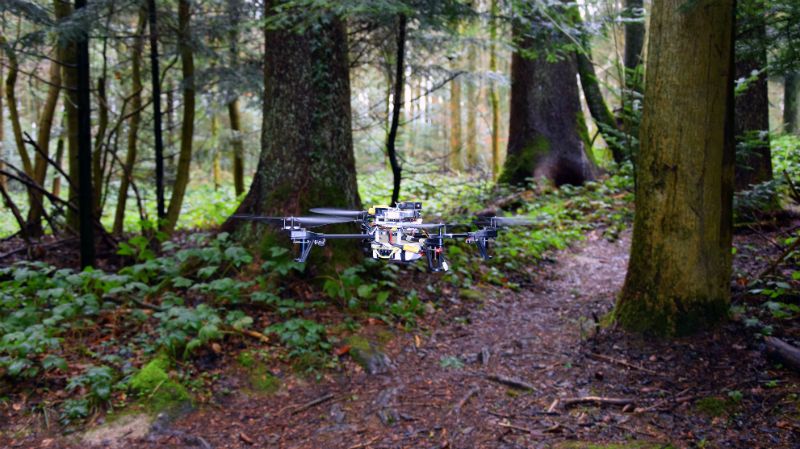
Today I would like to expound on a peeve of mine which of course most will find strange given that it is the year 2024 and technological development in all sectors of civilization continues to advance at an ever more rapid pace. In this particular case, I feel I must address the application of modern technology in the pursuit of our hominid quarry. I appreciate the temptation to employ such things as thermal imaging, drones and night vision. I have myself resorted to fielding digital game cameras and audial recording equipment, so I admit that I am not immune to the lure of the “Gadget”. My concern lies in the substitution of technology for one’s own intelligence and native senses which when combined with a paper notepad should be sufficient for any real scientific inquiry.

        The lazy minded will find such devices to be of value.

 Also, these technological marvels can serve to further divorce the researcher from his subject and the subject’s very environment. I argue caution when adopting any of these gimmicks without first employing the tools that nature has provided Man, those senses that have enabled our species to survive for thousands of years. I say, “Let not the machine become a crutch that weakens the intellect.

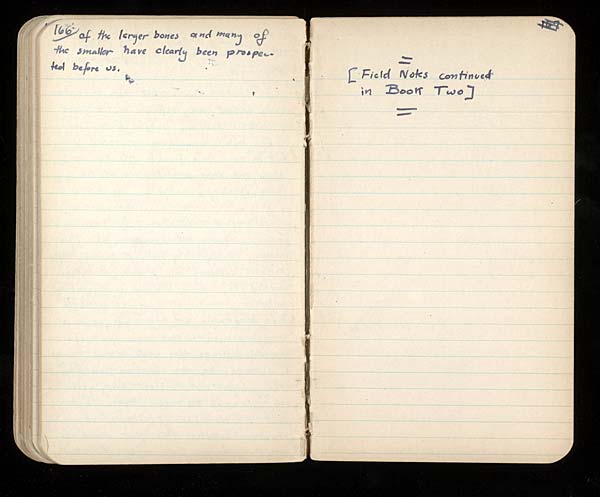
        My trusty notebook is pictured above.

Sincerely,

Milo Meeker, PHD.

Pringles

Raining in earnest at the moment so once again the reader will be subjected to another insight into the makeup of this Titan of cryptozoological research.

The following is truly a matter near and dear to my heart and has been a mainstay in my life since their development began in 1956. The subject I’m referring to is Pringles, second only to Sasquatch/Bigfoot in importance. As I mentioned, the development of the Pringle began in 1956 and continued through to the mid-60s at which time an acceptable formula was achieved. By 1967, Pringles were market-ready.

This amazing achievement can be attributed to Fred Baur a chemist brought on by Proctor and Gamble to address consumer complaints about chip resilience and longevity. His work resulted in the hyperbolic paraboloid shape of the individual Pringle as well as the now world-famous cylindrical container. Why the 1967 Nobel Prize in Chemistry ended up in other hands defies all reason. Baur spent two years developing the formula and shape from fried dough and employed supercomputers to ensure that each chip was aerodynamic enough to fit within the aluminum-coated cylinder without breaking.

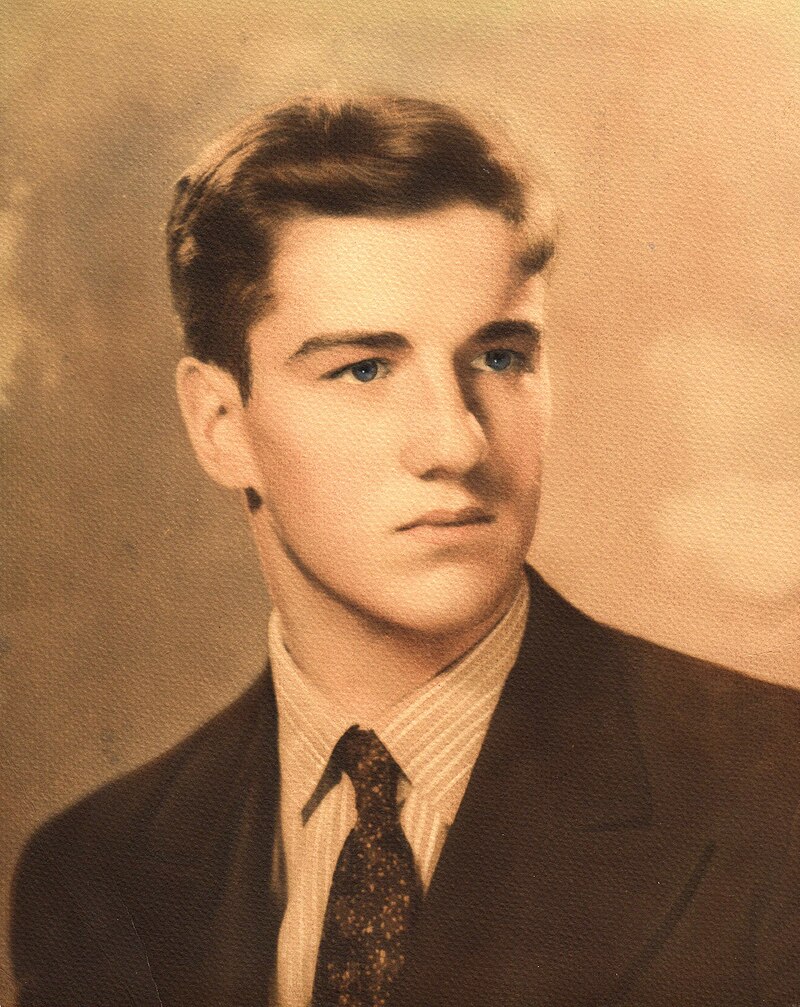
Organic Chemist, Fred Bauer

However, Baur struggled to refine the taste to Proctor and Gambles liking so Alexander Liepa was brought in to tackle this issue. Liepa succeeded in formulating a flavor that was pleasing enough to take the product to market. Sadly, Baur was removed from the Pringle project before the patent was issued and therefore received no official credit for his efforts.

As Pringles are essentially fried dough prepared from dehydrated, cooked potatoes and water. Other chip manufacturers who utilized dried potatoes objected to Proctor and Gambles use of the word “Potato chip” on Pringle’s packaging therefore they have been simply referred to as crisps instead of chips.

 I challenge the reader to find a finer example of the marriage of science, nature, and ingenuity in the history of humankind. The tube alone is a marvel of engineering as the durability of said container means that I can safely pack several of them in my rucksack without worrying about a loss of flavor (they are hermetically sealed) nor the integrity of the individual chips. These cylinders have the potential to be employed in a staggering number of ways. For instance, while in the bush I have used them to carry water, as a trap for small game, transporting fire bundles from camp to camp, and even as an in-shelter urinal during the small hours of a winter’s night. The delicate and uniform saddle shape of each Pringle recalls other historic achievements like Panama Canal or the Moon landing that occurred only two years after Pringles became available on the open market. The crisp structure is delicate but strong and fits perfectly in the mouth. I stand by the original flavor as the pinnacle of chip/crisp flavor and while I occasionally indulge in Sour Cream and Onion or BBQ, the original formula stands head and shoulders above the rest

 Once Baur shed his mortal coil, some of his ashes were placed in a Pringles can and then buried at his request. I plan to make a similar arrangement with my own cremains but with the caveat that the Pringle can containing my ashes is shot into orbit to forever circle the planet that our species and Sasquatch call home.

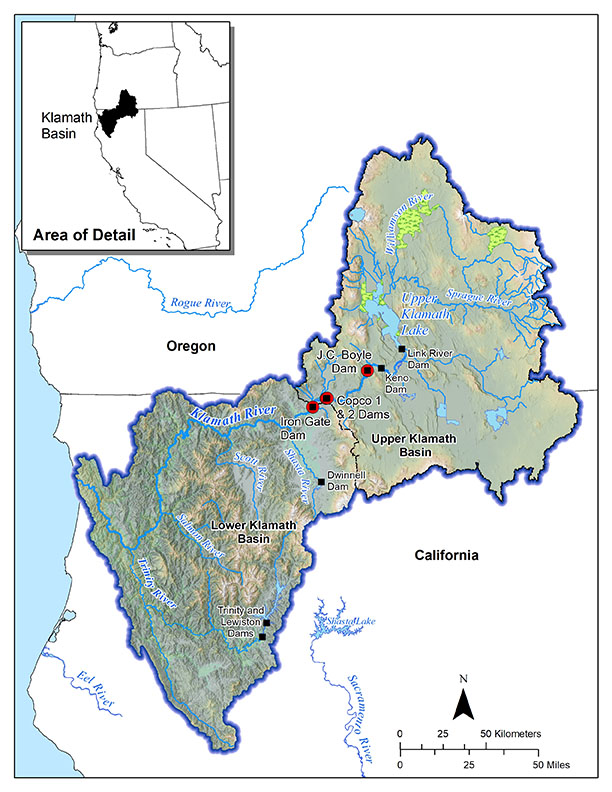
Klamath Basin

Greetings from the verdant and fecund basin that is the Williamson River Valley. This area of southern Oregon is part of the ancestral home of the Klamath Tribes, a group comprised of The Klamath, Modoc and Yahooskin peoples. A highly successful group that inhabited this land of plenty, a gift of Gmok’am’c the creator for thousands of years before the arrival of the first Europeans. A fur trapper named Peter Ogden who was in the employ of the infamous Hudson Bay Company was the first non-indigenous human to set foot in the area in 1826.

 After many years of hostile engagements with the growing number of Europeans in the area, the Klamath were forced to cede millions of acres of land once the Reservation period commenced. The tribe retained hunting and fishing rights in what little remained of their once vast territory. However, despite the loss of land, the Klamath were quite successful and managed to remain financially independent through cattle farming, freighting and selling lumber to the colonists.

In 1961 the Federal Government removed the Klamath from the Federally recognized tribal list despite evidence to the contrary provided by both the Bureau of Indian Affairs and the tribal elders that they were not ready to assimilate into European culture or thrive without access to education, healthcare and other resources provided by their status as a reservation. Many tribal members were offered individual payments for their land and the U.S government bought the forested land in five-thousand-acre parcels while a paper company based in California acquired 90,000 acres. The effects of the termination were far reaching and created a cultural bloodbath comprised of reduced lifespans, higher infant mortality rates, higher incarceration rates and alcoholism. This was in effect a land grab by the U.S Government. The termination was eventually rescinded in 1986 but the lands taken in 1961 were not returned.  

Presently their position has improved and, in this wonderland, steeped in history both good and ill lies a rich vein of Bigfoot lore. What follows may lack the exacting standards of my normal process that my readers have become accustomed, but anthropology is not my field of study so in this endeavor I am but a novice.

The Modoc, refer to the hairy hominid as Mata Kagmi, while the Klamath name it Ste-ye-hah which loosely translates as “spirit hiding in the cover of woods” there is some confusion here so more research is necessary as Ya, yah, Ya-ash might refer to Bigfoot but is described as a one legged spirit. Another phenomenon of note are the so called “Stick Indians” which is clearly a European euphemism. These beings are often described as having their hair plaited and wearing skin clothing. I’m led to understand that they are quite hostile and should be avoided at all costs. I imagine that these must be homo sapiens, or a close relative based on the lore but it’s all to the good as the Wildman/Sasquatch phenomenon often contain reports detailing similar traits and behaviors leading the lay person to perhaps confuse one for the other, It’s only through years of dedicated and rigorous application of the scientific process that one can learn to separate the wheat from the chafe in the mine field that is Sasquatch research.  I leave you now dear reader as I must make some headway into the bush before nightfall.

p.s

 I will continue to pass on some of the indigenous lore I collect as I go.

No such thing as luck

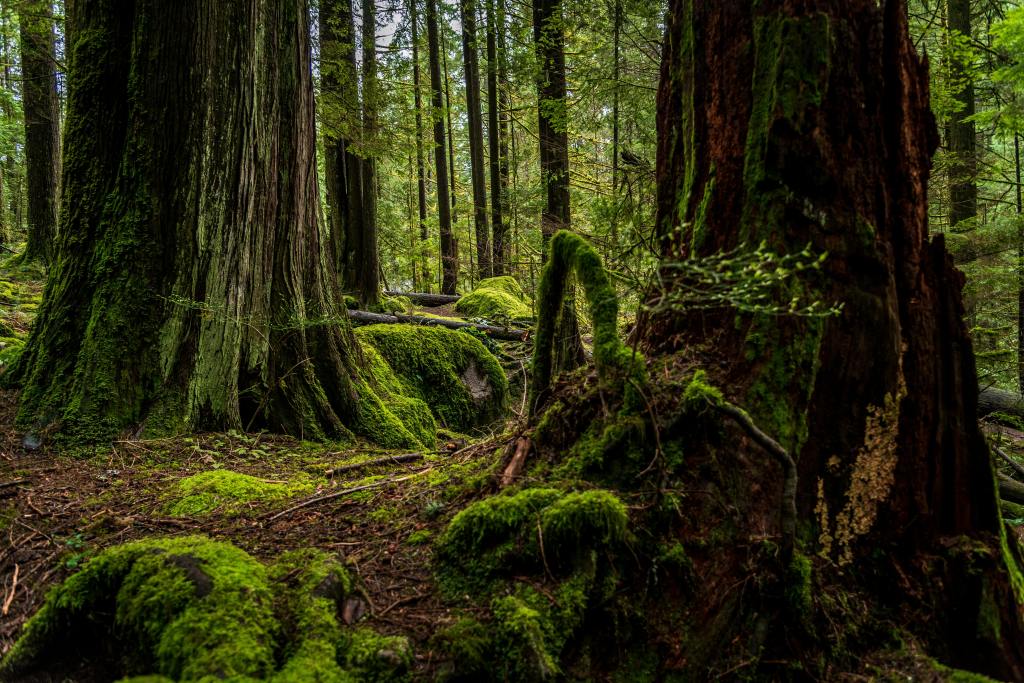
An image of the temperate rainforest I’ll be calling home for many months.

The weather has turned, what had heretofore been the crisp cold of snow and ice has turned towards the damp and bone chill of rain in winter. Thus, I have stuck to hiking along any tarmac available rather than bushwack through the rain-drenched forests. Nothing leads to hypothermia faster than being cold and wet. Even so, I am forced to make camp early some days to dry out my socks over the fire to stave off the bugaboo of frostbite. Having already lost one toe to this malady I choose caution over fortitude in dealing with these conditions which I admit have been unconducive towards furthering my search for evidence of the North American Wood Ape. One often hears or reads eyewitness accounts of roadside encounters with Sasquatch from which one might infer that physical evidence could be present along roads that pass through highly active areas of reported activity. Perhaps I may “luck out” if one chooses to ascribe to such a thing. To me, the term luck is employed merely as a way to excuse a lack of preparation and diligence in one’s chosen undertaking. Therefore, being lucky is merely a product of mastery acquired through many years of sustained application of knowledge and effort.

Now to address my current plan of attack. I previously mentioned recording the lore around my subject that Native Americans have been collecting for hundreds if not thousands of years. Mainstream Academia has once again fallen prey to the intellectual vanity of Eurocentric science which discounts the data collected by indigenous peoples across the globe. This scientist plans to leave hubris by the door and leave no stone unturned in is search for answers.  I may be the only researcher currently compiling this wealth of information which is a prospect I find stimulating in the extreme. But now, my Pringles call to me as does my bivy-sack. I bid my readers adieu for the nonce.

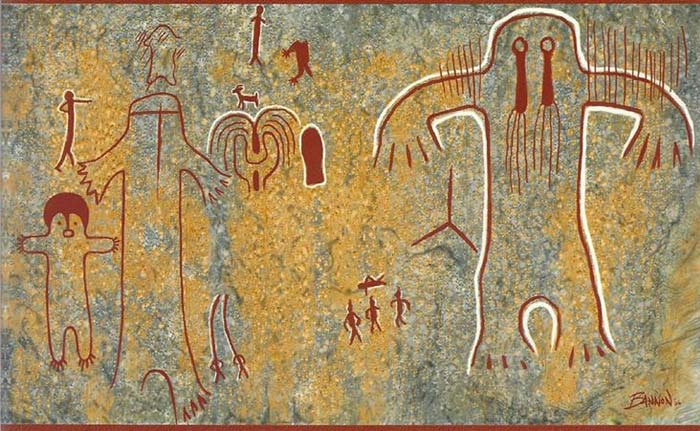
Native American rock depicting my quarry.

A return to work.

9/20/2022

Reader, it has been some months since my last entry. Having battled my way through a series of so-called therapeutic chats required by our faulty justice system I am now free to return to my work. Time spent in the company of this “Doctor” has only reinforced my disdain for academia and its diminishing standards. This experience has also served to inspire me towards greater efforts to prove the existence of Gigantopethicus.

 My soul filled with a heady brew of newfound resolve, excitement as well as a dash of humility I hereby rededicate my prodigious mind and stalwart body to my chosen path in life.  I plan to continue my trek into the forests of Oregon, eventually moving south towards Northern California where much of modern Sasquatch pop culture was born. Occasionally to move forward one must return to the beginning. I pen this memo from an impromptu camp along Highway 101 just south of Aberdeen Washington.

Yours in perpetuity,

Dr. Meeker